October 13, 2026
What counts as a reversal event under VCS non-permanence risk rules
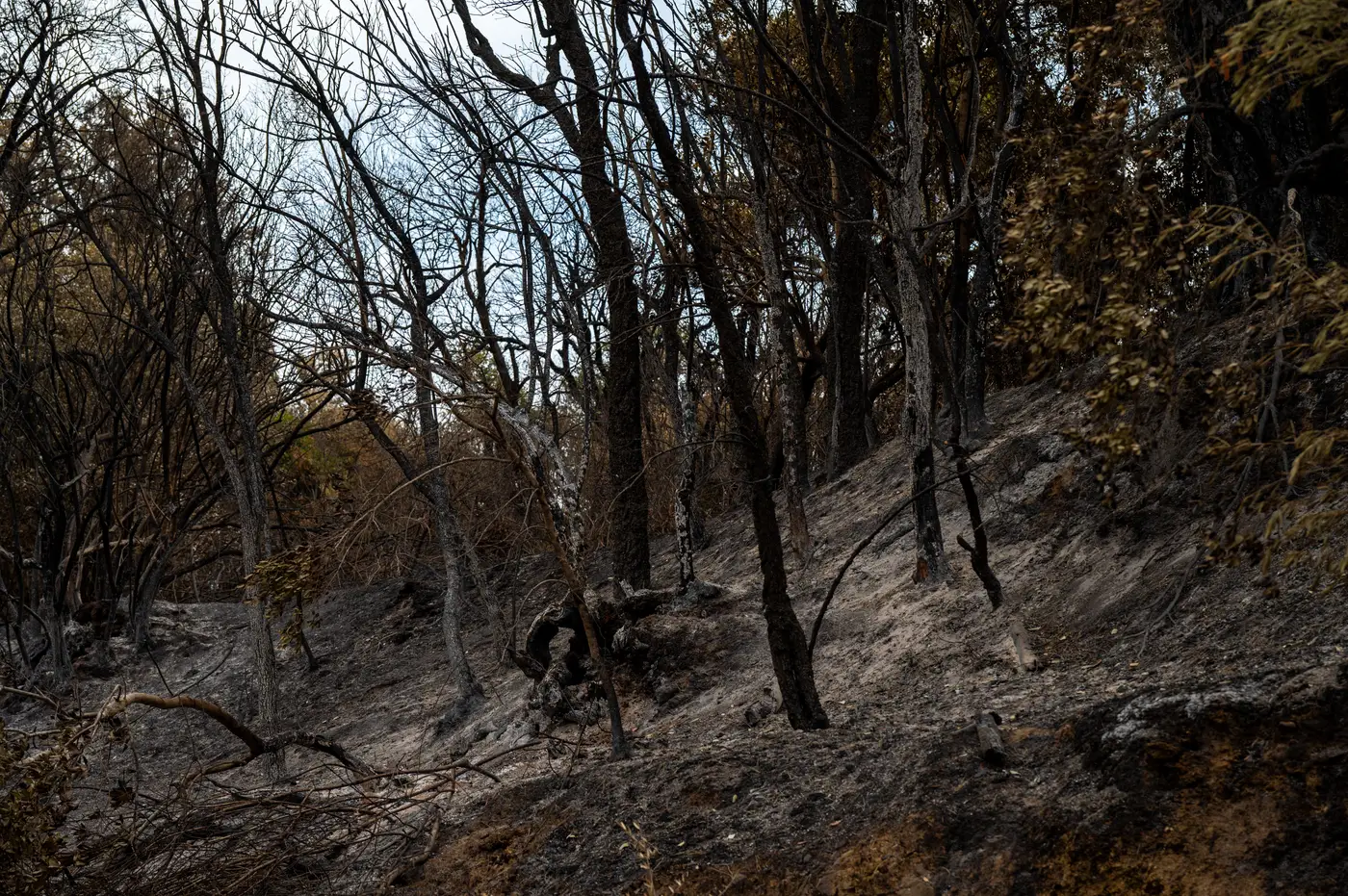
A reversal, in VCS terms, is any loss of carbon stock that was already measured, verified and issued as credits. Not a drop in projected sequestration, not a bad monitoring year on paper. Carbon that was in the ground or in standing biomass, and now isn't.
That distinction trips up a lot of project teams the first time they run into it. A below-target growth year isn't a reversal. A fire that burns through a planted stand after you've already had credits issued against that stock is.
What the tool defines as a reversal
Verra's AFOLU Non-Permanence Risk Tool is where the risk rating comes from, and that rating is what sets your buffer pool withholding at validation. But the tool also frames how a loss gets classified once it happens on the ground. The questions your verifier will ask come down to three things: was carbon stock lost, was it stock that had already generated credits, and was the loss within your project boundary.
Fire, pest outbreak, disease, drought mortality, extreme weather, these are the events people usually picture. But land-use conversion counts too: if part of your boundary gets logged, converted to agriculture, or otherwise loses the carbon pool you're crediting, that's a reversal regardless of cause.
Natural reversals vs avoidable reversals
This is the split that actually determines what happens next, and it's worth more attention than most project teams give it before the first incident.
A natural (sometimes called unavoidable) reversal is one outside the project proponent's control: wildfire from an external ignition source, a pest outbreak, a storm. An avoidable reversal is one tied to the proponent's decisions or negligence, intentional early harvest, failure to maintain fire breaks you'd committed to in your PD, converting part of the project area to another land use yourself.
The practical difference is who covers the loss. For a natural reversal, credits get canceled from the shared buffer pool, and your project generally isn't required to replace them from your own account. For an avoidable reversal, the project proponent is on the hook: you compensate by retiring an equivalent volume of your own credits, on top of whatever buffer pool deduction already applies. Verra's review of which bucket an event falls into leans heavily on your monitoring record, which is exactly why the paperwork matters as much as the event itself.
What happens to your buffer pool when a reversal hits
Every AFOLU project contributes credits into the shared buffer pool at issuance, sized to the risk rating from the non-permanence tool. That pool exists so a reversal on one project doesn't invalidate credits already sold from that project. When a reversal is confirmed, Verra cancels buffer credits equal to the lost stock, a cost absorbed by the shared pool rather than a deduction from your own account for a natural event. But a pattern of reversals, or one with a controllable cause, can also push your project's risk rating up at the next re-assessment, which raises your buffer contribution rate going forward. One bad fire season doesn't just cost that year's credits. It can cost you more withholding on every future issuance.
Documenting it for your verifier
None of this classification happens automatically. A verifier needs dated, boundary-specific evidence: what was there before, what's there now, and when the change happened. That means a before/after record tied to your project polygon, with dates showing when the change occurred relative to your last monitoring report. Change detection against your baseline imagery, with a clear date stamp on the loss, is what lets a verifier (and Verra, if it escalates) assess whether an event is natural or avoidable, and whether the area affected matches what you're reporting.
This is also where a lot of developers lose time every reporting cycle, pulling together scattered imagery and field notes to reconstruct what happened and when. If you'd rather have that evidence assembled into a dated dossier against your project boundary instead of rebuilding it from scratch, that's the core of how Carbon Project MRV turns annual VHR imagery into monitoring evidence for exactly this kind of reporting.
If a reversal event has already hit your project area, get the dated before/after record in order before your next verification window opens.