October 14, 2026
What is a non-permanence risk buffer in carbon credit issuance?
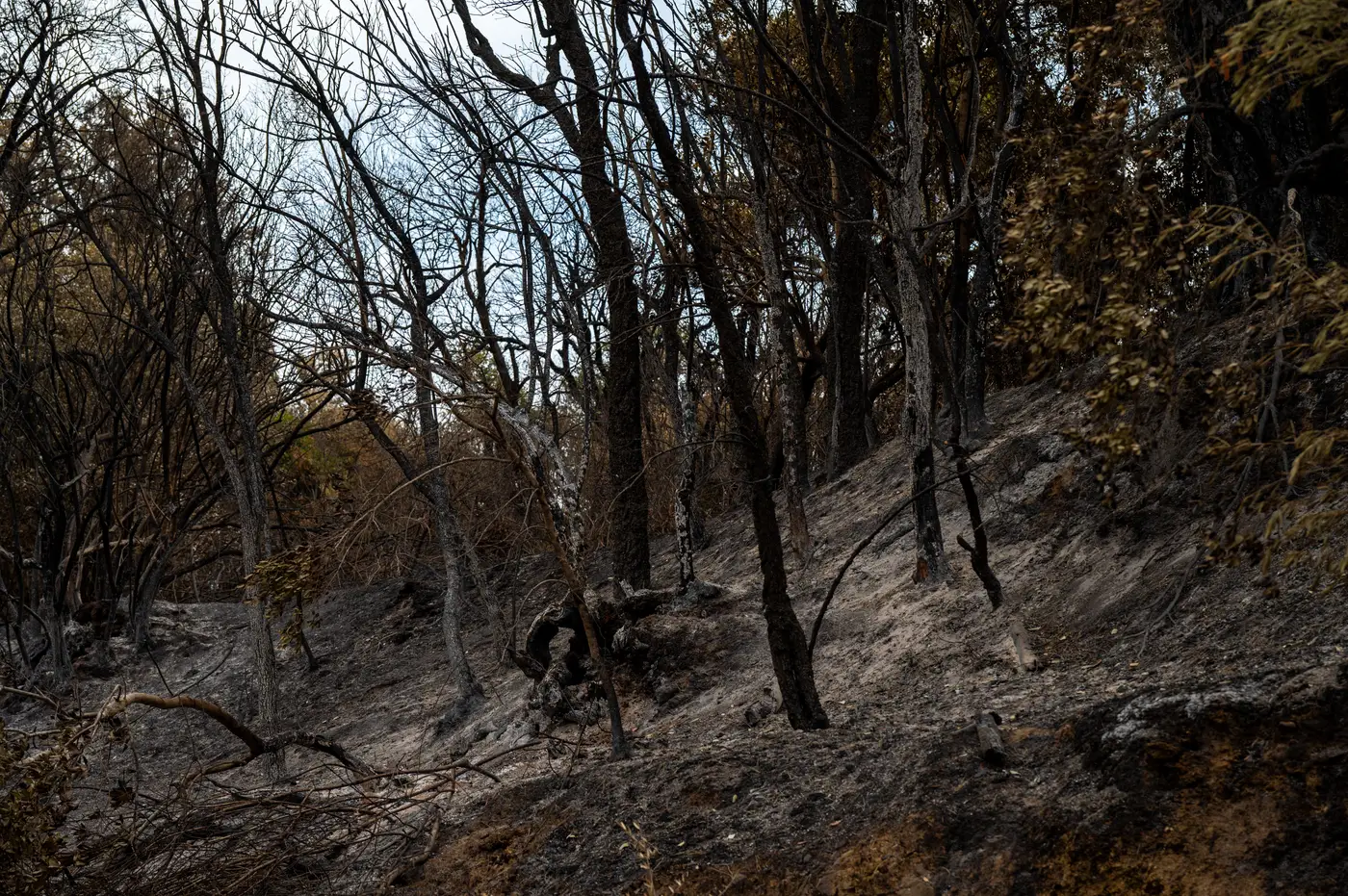
If you've gone through issuance once, you already know the buffer pool takes a bite out of your credits before anything hits the registry account. The non-permanence risk buffer is the mechanism that decides how big that bite is.
The short version
A buffer pool is a shared reserve of credits held back across a standard's whole AFOLU portfolio (VCS, ACR, CAR all run some version of this). Instead of insuring each project individually, the standard pools a slice of every project's issuance into one account. If a project reverses, through fire, pest outbreak, land-use change, whatever, the standard cancels credits from the pool rather than chasing down buyers who already retired credits from the failed project. Your contribution is the non-permanence risk buffer: a percentage of your issued credits withheld at every verification event, for the life of the project.
The percentage isn't fixed. It comes out of a non-permanence risk rating, a scored assessment covering things like financial viability of the project entity, experience of the project proponent, fire and pest exposure for the region, community and political stability, and the specific reversal exposure tied to your project activity (ARR, REDD+, IFM each carry their own weighting in the tool). Score well across those categories and your deduction sits well under what a shakier project pays. Under VCS's AFOLU Non-Permanence Risk Tool, contributions have run anywhere from the single digits up past 60% for genuinely exposed projects, though the exact number for your project depends entirely on your own scoring inputs, not a default.
Where the rating gets decided
This is the part developers underestimate: the risk rating isn't set once at validation and forgotten. Most standards require you to revisit it periodically, and some categories inside the tool get re-scored using evidence from your monitoring reports. Fire risk, pest risk, and the "natural disturbance" category in particular get re-evaluated against what you can show happened, or didn't happen, on the ground since last verification.
That's where your annual monitoring evidence stops being paperwork and starts being the thing that moves your buffer contribution up or down. A verifier reviewing a reversal-risk category wants dated, boundary-specific proof: did the planted area hold, did canopy cover progress on schedule, is there any sign of dieback or encroachment that would bump your risk score for next cycle. If your evidence is thin, generic, or arrives as a pile of unlabeled imagery assembled the week before the site visit, the conservative move for a verifier is to leave the risk score where it is, or push it up. A tighter, better-documented monitoring record doesn't guarantee a lower buffer withholding, but it's the only lever you actually control between verification events.
Buffer pool deduction versus permanent cancellation
Worth being clear on the distinction, because developers sometimes conflate the two. The buffer pool deduction happens at every issuance, it's routine, it's not a penalty, it's the cost of participating in a pooled insurance system. Permanent cancellation is different: that's what happens to credits from the pool itself if your project reverses and the standard has to make buyers whole. Your annual monitoring record is the evidence base for the first (keeping your risk rating, and therefore your ongoing deduction, where it should be) and the thing a verifier reaches for if the second ever becomes a live question.
What to have ready before your verifier asks
Most standards' re-assessment schedules ask for the same handful of things: a dated record of what's planted and where, evidence the planted area is holding or expanding against boundary, and anything that speaks to disturbance, whether that's fire scars, pest damage, or encroachment at the edge. If you're assembling that evidence from scratch every cycle, from field photos, old flight logs, whatever's lying around, it's worth looking at how Carbon Project MRV turns annual VHR imagery into a dated monitoring dossier built around exactly those categories, so the record is ready before the verifier asks for it rather than after.
Get in touch if you want to see what a dossier for your boundary would look like ahead of your next reporting cycle.