November 2, 2026
What is a vintage year in carbon credit issuance, and why date it to imagery?
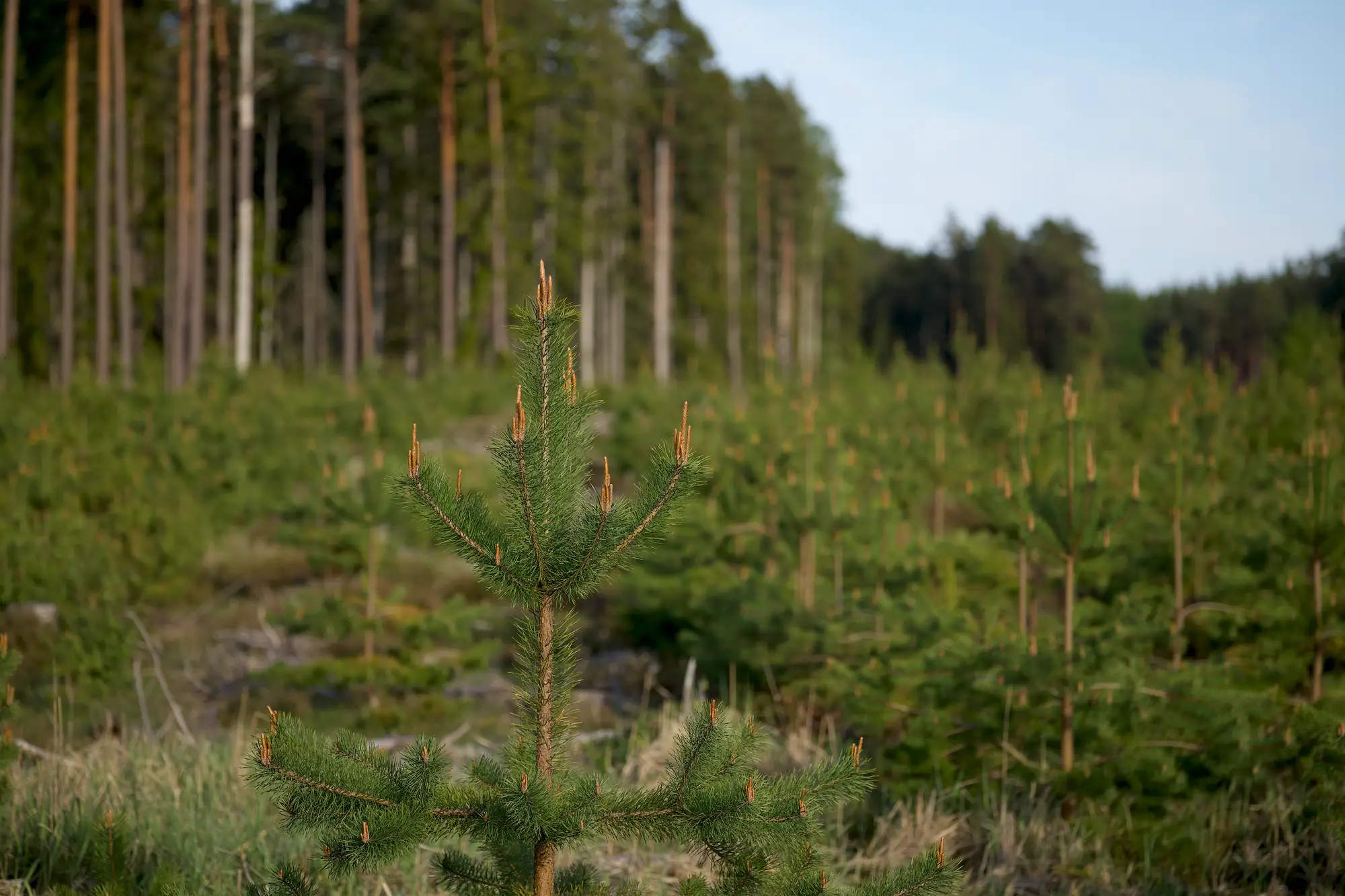
If you've filed a monitoring report, you already know the vintage year isn't the year a credit gets sold or even the year it gets issued. It's the year the emission reduction or removal actually happened on the ground. A credit issued in 2026 can carry a 2023 vintage if that's the monitoring period the activity falls in. Buyers care about this distinction because it tells them how old the claim is. Registries care about it because it's the anchor for everything else in the file.
The vintage year is a claim about timing, and timing has to be provable
Say your crediting period runs on annual monitoring cycles and your project planted or avoided deforestation across a given boundary in year three of the project. The vintage year for that batch of credits is year three, full stop. But "year three" isn't self-evident from a spreadsheet. A verifier reading your monitoring report has no independent way to know that the trees in your inventory were standing, or the clearing was avoided, inside that specific calendar window, unless something outside your own accounting ties the activity to that date.
A satellite pass has a timestamp baked into the metadata, and that's what closes the gap. If your monitoring report says canopy cover increased by a given amount between January and December of the vintage year, and you can show an image from near the start of that window and one from near the end, you've turned a narrative claim into something a third party can check against an independent clock. Imagery with a hard capture date is one of the few evidence types that proves your activity happened inside that specific year, checked against a clock your own accounting doesn't control.
Why ex-post verification leans on this so hard
Most forestry and ARR methodologies verify ex-post: the activity happens first, then gets checked. That ordering is exactly why vintage dating matters so much more here than it would for, say, a one-time equipment swap with a clear before-and-after invoice. Planting, regrowth and retention unfold slowly, over the same stretch of time the vintage year is supposed to represent, so the registry needs evidence sampled across that stretch, not a single site visit that happens to land after the fact.
This is also where non-permanence risk and the vintage year intersect. A buffer pool deduction, a reversal event, a boundary dispute: all of these get assessed against what was true during a specific vintage. If your evidence base is just a field team's confirmation from March, a reversal that happened in June of the same vintage year never makes it into the record. Dated, repeated imagery captured across the monitoring period gives you a timeline instead of a snapshot, which is what lets a verifier sign off on additionality and retention for that year specifically.
What this means for your monitoring file
This is why verifiers increasingly ask project developers to produce change-detection evidence tied to specific capture dates rather than a single end-of-period photo set. A monitoring dossier built around annual very-high-resolution imagery, with each pass date-stamped and matched to the vintage it's meant to support, answers the question a registry is asking: did the activity happen when you say it did. Carbon Project MRV turns that annual imagery into exactly that kind of dated record, matched to your project boundary and your vintage years, so the paper trail a verifier wants is already assembled instead of pieced together the week before your reporting deadline.
If your next monitoring cycle is coming up and you'd rather hand your verifier a dated dossier than rebuild your evidence file from scratch, that's the gap this is built to close.